
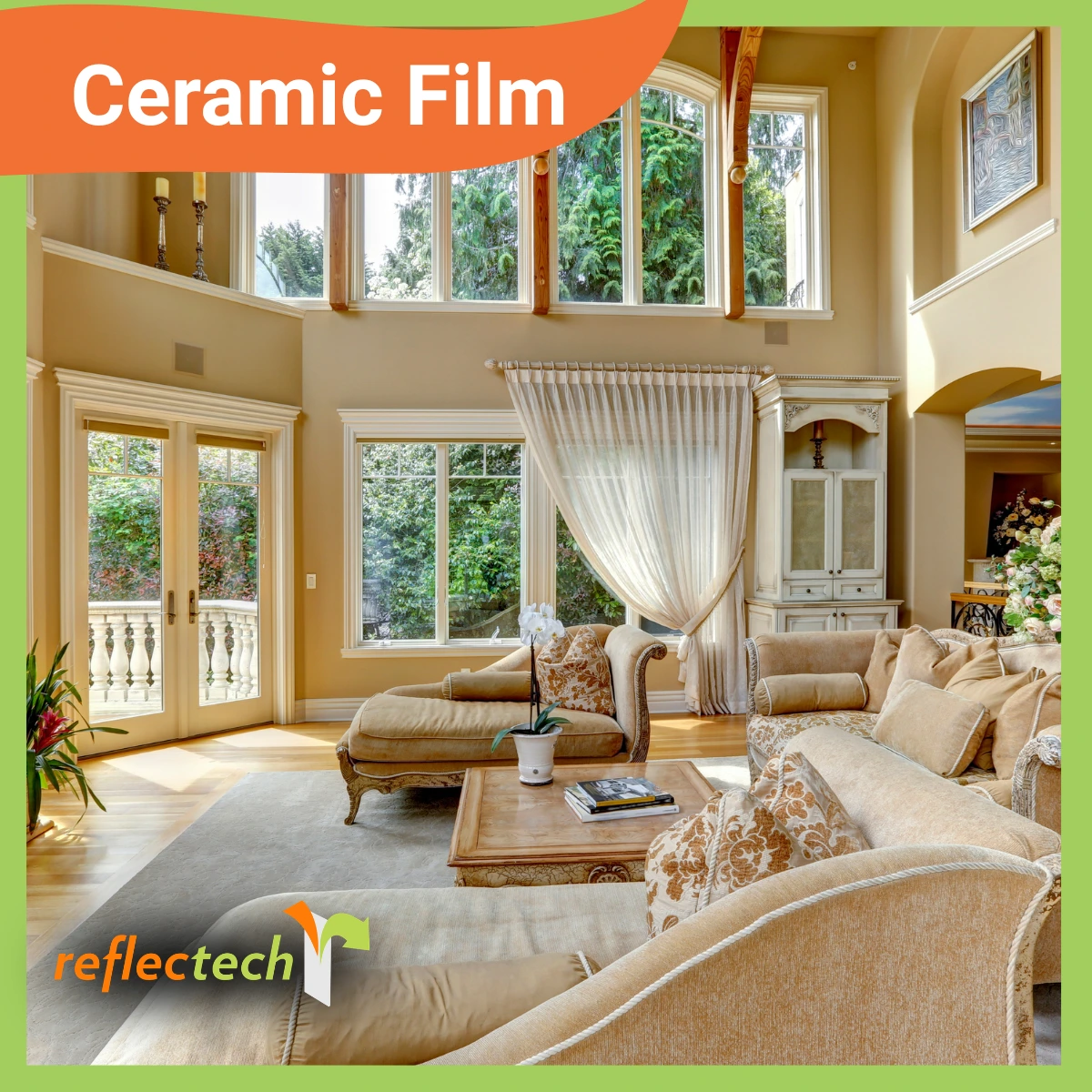
There is a lot of appeal to installing a ceramic window film. If you are looking to make your home cooler in the blistering summer and warmer during our freezing winters, you have likely considered upgrading your glass. A lot of homeowners turn to aftermarket tinting to save on energy bills, improve their comfort, and protect their furniture. However, before you hire an installer or purchase any product, we want to give you something incredibly valuable.
Consider this article our free gift to you: our professional, unvarnished advice.
The window tinting industry is filled with hype, aggressive sales tactics, and one-size-fits-all promises that can actually destroy your property if you aren’t careful. The biggest trend on the market right now is ceramic window film. While it is an incredible piece of technology, it is widely misunderstood. If applied incorrectly, it can lead to shattered glass, voided warranties, and thousands of dollars in damages. We want to help you stop these disasters before they start by explaining exactly how these products interact with the sun, your glass, and the unique climate we live in.
Here is everything you need to know to protect your home and make an informed, confident decision.
The Appeal of Ceramic Window Film
If you spend any time researching window upgrades online, you will inevitably be targeted by ads for ceramic window film. Salespeople and manufacturers promote it heavily, and for a good reason: it boasts some highly desirable characteristics.
The primary benefit of a high-quality ceramic window film is that it is exceptionally clear. For decades, the only way to block the sun’s heat was to apply a dark, heavily metallized dye to your windows. These older films looked like mirrored sunglasses; they were highly reflective on the outside and significantly darkened the interior of your home. Many homeowners hated the shiny, commercial-building aesthetic and the loss of natural daylight.
Enter ceramic technology. By utilizing microscopic ceramic nano-particles, manufacturers created a product that does not look shiny or reflective on the outside. You get to enjoy a completely clear, natural exterior view while the intelligent nano-particles go to work blocking infrared heat and ultraviolet rays. Because of this clarity, many sales reps will try to convince you that ceramic is the perfect, universal solution for every single house.
But here is the catch: ceramic window film does not work for every window.
The Science of Solar Absorption
To understand the risks, you have to understand how this technology actually manages heat. Unlike traditional reflective films that act like a mirror and bounce solar radiation away from your house, ceramic is a highly solar absorbent film.
Instead of rejecting the heat back into the atmosphere, the nano-particles in a ceramic window film act like a sponge. They absorb massive amounts of solar energy, stopping it from passing through the glass and entering your living room. While this keeps your interior air cool, that absorbed energy doesn’t just magically disappear. It is trapped directly inside the glass pane itself.
When a window is treated with an absorbent film, the glass becomes extremely hot. If you were to touch a ceramic-tinted window during a sunny afternoon, the burning sensation would immediately prove just how much energy is being stored in the pane.
This brings us to a critical concept we call window compatibility. Because ceramic films absorb so much heat, they are not universally safe. Unless the ceramic particle count is perfectly engineered and matched to the specific limitations of your glass, it might not work with your window at all. If the particle count is too high, the film absorbs more energy than the glass was manufactured to withstand.
The Edmonton Climate Challenge
Window compatibility becomes a matter of absolute urgency when we look at our local geography. Living in Edmonton, our homes face environmental factors that you simply will not find in places like California or Florida.
First, Edmonton sits at a higher elevation than many coastal cities. This higher elevation means we have slightly thinner atmosphere above us to filter out the sun’s raw intensity. Second, our northern latitude means our sun exposure comes at a variety of extreme angles throughout the year. In the summer, the sun beats down relentlessly for up to 17 hours a day. In the winter, the sun sits very low on the horizon, allowing intense, direct solar radiation to strike your vertical windows straight on, rather than glancing off them from above.
When you combine our higher elevation and unique sun exposure with our wild, rapid temperature swings—where a freezing wind can roll in just hours after blazing sunshine—your windows are constantly under siege. Because of these intense local factors, applying darker ceramics is a high risk for a catastrophic failure known as thermal stress.
Thermal Stress Explained Simply
What exactly is thermal stress, and why does it break expensive modern windows every single day?
Let’s explain thermal stress very simply. Imagine taking a cold glass out of your refrigerator and immediately pouring boiling hot water into it. The glass shatters instantly. This happens because the material tries to rapidly expand from the heat, but it cannot expand evenly or fast enough.
On your house, thermal stress occurs when one specific part of your window pane heats up much faster than the rest of it. When the sun hits a window treated with a highly absorbent ceramic window film, the center of the glass soaks up the heat and expands. However, the edges of that exact same piece of glass are tucked away inside the window frame. In Edmonton, that frame is often exposed to freezing outside air, keeping the edges of the glass ice-cold.
You now have a physical war happening at a molecular level inside your window. The blazing hot center of the glass expands outward, while the freezing cold edges stubbornly resist that expansion. This extreme temperature difference generates immense pressure. The glass literally warps under the strain. Eventually, the pressure exceeds the structural integrity of the material, and the window loudly cracks.
A thermal stress fracture is uniquely identifiable. It almost always starts at the edge of the frame at a perfect 90-degree angle, and then it meanders wildly across the rest of the glass like a lightning bolt. Once this happens, the glass cannot be repaired; the entire unit must be completely replaced, and because the failure was caused by an aftermarket aftermarket film, your manufacturer warranty is usually voided.
The Complication of Modern Low-E Glass For Ceramic Window Film
In Edmonton, the risk of thermal stress is exponentially higher today than it was thirty years ago because of how modern windows are built. Most homes built or renovated recently feature Low-E (low emissivity) glass.
Manufacturers apply incredibly thin, microscopic metallic coatings to the inside of Low-E glass panes to make your home more energy-efficient. During the winter, these coatings reflect the heat from your furnace back inside your living room. During the summer, this coating is pretty passive. Why? In northern climates (above mid-west US States), double pan Low-E is applied to the Side 2 (Side 1 being the exterior facing side). This helps increase the U-Value of the window in winter, making it more comfortable and less draft than a conventional double-pane window. In the hot southern states they have the Low-E on Side 3, inside the pane on the 2nd pane, which increases the thermal insulation against the hot outdoors.
How does this effect Ceramic Window Film selection? Low-E glass inherently holds more heat than standard, old-school glass. When an amateur installer slaps a highly absorbent ceramic window film onto a Low-E window, they create a dangerous heat trap. The factory Low-E coating is trying to reflect energy back to the pane with the aftermarket ceramic film that is absorbing energy. The solar radiation literally bounces back and forth in a tight space, multiplying the temperature of the glass rapidly.
When you mix Edmonton’s intense, low-angle sun, higher altitudes, freezing outside frames, Low-E coatings, and a poorly specified ceramic window film, you have a recipe for disaster. The thermal stress simply becomes impossible for the glass to survive.
The Reflective Alternative: A Safer Path
If a dark ceramic window film is too dangerous for your specific home, how do you get the heat relief you desperately need? The answer lies in choosing an alternative that does not trap heat in the first place.
Reflective films, such as the industry-leading Visio 15, offer a radically different approach to solar control. Instead of acting like a sponge, these advanced products act like a shield. They use microscopic metal layers to bounce the solar energy away from your house the second it hits the glass.
Because they reject the heat rather than absorbing it, your glass stays significantly cooler throughout the afternoon. A cooler pane of glass means the temperature difference between the center of the window and the edges hidden in the frame remains low. By eliminating that sharp temperature contrast, you completely neutralize the risk of thermal stress.
Furthermore, reflective films protect the delicate seals that hold your double-pane windows together. When a ceramic window film absorbs too much heat, it can actually melt or degrade the perimeter seals of the window unit. Once that seal breaks, the insulating argon gas escapes, outside moisture gets in, and your beautiful view is ruined by permanent foggy condensation between the panes. Reflective technology keeps the entire unit cool, protecting both the glass from cracking and the seals from failing.
While you may sacrifice the total invisible clarity of a ceramic product, modern reflective films are aesthetically gorgeous. They provide a sleek, sophisticated exterior appearance that grants you ultimate daytime privacy—preventing nosy neighbors from seeing inside while you still enjoy a perfect view out.
Trust the Professionals, Not the Hype
The internet is overflowing with terrible advice, and local competitors will often push expensive ceramic window film simply because it carries a higher profit margin. They will ignore the basic physics of thermal stress and leave you to foot the bill when your windows shatter in the middle of an Alberta winter.
This is why our free gift of advice is so vital. You must always verify product claims with real glass professionals who understand window compatibility.
At ReflecTech, we do not guess. We actively calculate the exact risk of thermal stress on your specific windows before we ever cut a piece of film. We evaluate your glass type, the age of your windows, your specific sun exposure, the shading from nearby trees or rooflines, and the exact ceramic particle count of the films we carry. If a ceramic window film poses a high risk to your property due to our Edmonton climate, we will honestly refuse to install it and guide you toward a safer, highly effective reflective alternative.
When is a Ceramic Window Film Good?
Despite the risks of thermal stress on certain residential windows, there are specific situations where ceramic window film absolutely shines in Edmonton. For local retail shops that rely on foot traffic, maintaining high visibility of their wares is crucial. Store owners do not want a dark or mirrored tint limiting the view inside during the day, making ceramic the perfect choice. It delivers a massive 50% reduction in incoming solar energy with virtually no downside—the trick is simply relying on our experts to specify a ceramic window film guaranteed to work safely with their specific storefront glass. Ceramic window film is also a massive favorite for condo owners. Most Edmonton condo boards strictly forbid changing the exterior facade, meaning traditional reflective films are quickly rejected. Because ceramic is visually imperceptible from the street, it easily passes board approval while still granting residents 50% glare reduction and 50% heat reduction. Finally, in commercial high-rises with double-pane windows, landlords fiercely protect the uniform look of their glass curtain walls. They refuse installations that make the building look mismatched or banded. In these towering properties, ceramic window film delivers powerful interior climate control with nearly zero external sign that it is even there.
More Questions? Ask a Pro.
Your home is a massive financial investment. Upgrading your windows should lower your energy bills, protect your hardwood floors from fading, and make your living room comfortable—it should never put your property at risk.
By understanding how highly absorbent films work, respecting the local climate, and acknowledging the reality of thermal stress, you can confidently upgrade your home. Take this free gift of advice, ask the hard questions, and reach out to ReflecTech to ensure your window transformation is a total success.
